Discover MarTech: the essential guide to marketing technology
18 July 2024
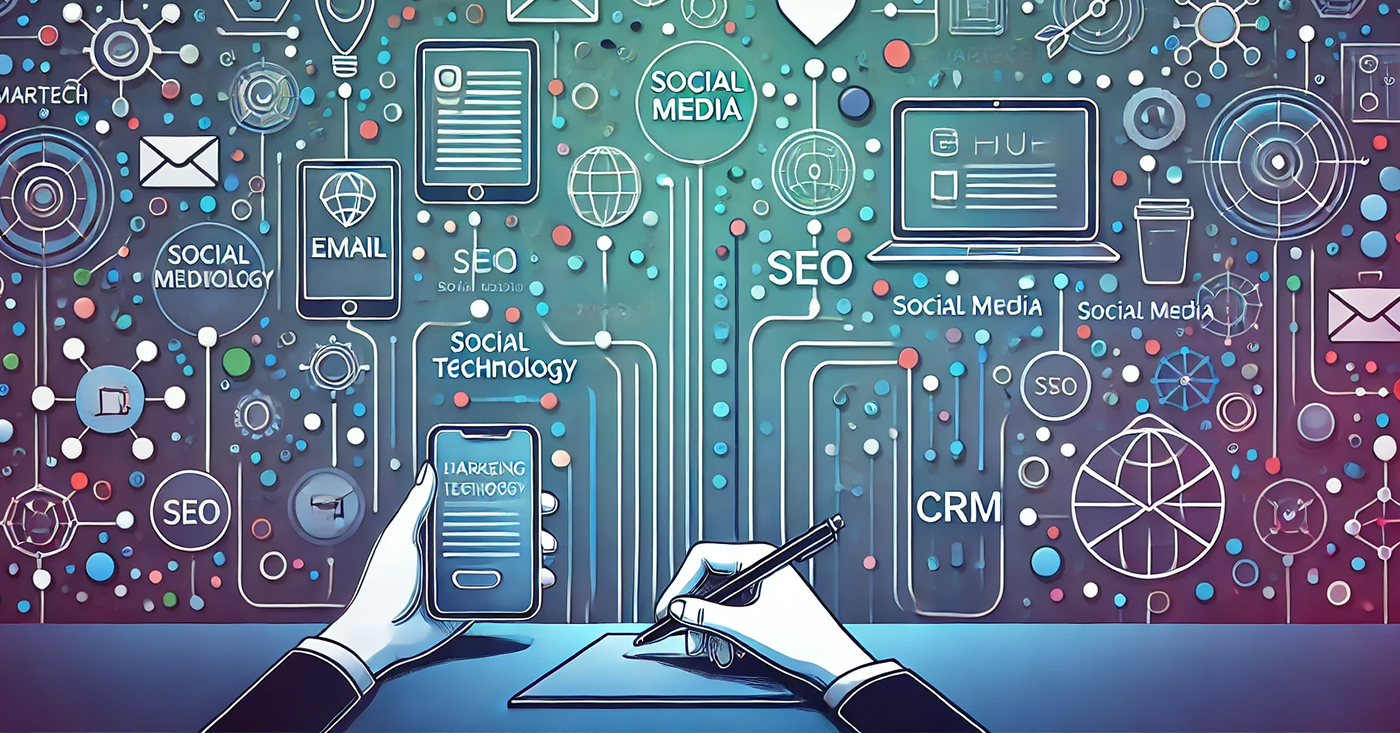
The term MarTech, short for marketing technology, refers to a collection of digital tools designed to enhance and optimize marketing activities. These tools, organized within what is known as a MarTech stack, enable marketers to automate and improve the efficiency of their strategies. In an increasingly technology-driven landscape, automation and effectiveness are crucial for successful marketing strategies. MarTech offers a wide range of solutions that streamline processes, allowing for better results with fewer resources, perfectly adapting to the specific goals and needs of your brand.
What is MarTech?
MarTech refers to the software used by marketing professionals to enhance and optimize their activities, enabling them to achieve their goals more efficiently. These technologies are employed to plan, execute, and monitor campaigns and marketing strategies, facilitating marketers' work. We’ll also discuss the MarTech stack a specific set of marketing technologies that simplifies managing activities in a multi-channel environment characterized by numerous customer touchpoints.
What’s the Difference Between MarTech and AdTech?
Similar to the distinction between marketing and advertising, the terms "MarTech" and "AdTech" (short for advertising technology) are not interchangeable. The main difference lies in the fact that AdTech focuses solely on influencing buyer behavior through promoting offers, while MarTech is used for designing, publishing, and managing campaigns and other marketing activities.
More precisely, AdTech is an umbrella term that includes advertising strategies and tools such as demand-side platforms (DSPs), supply-side platforms (SSPs), and ad exchanges. This technology primarily revolves around campaign distribution.
On the other hand, MarTech involves software for customer relationship management (CRM), social media management tools, email marketing solutions, and more. It encompasses a broader range of technological solutions used by marketers throughout the digital marketing process.
While both MarTech and AdTech are crucial for an effective brand strategy, our focus here is primarily on MarTech.
Why is MarTech crucial?
Technology is playing an increasingly central role in the marketing world. As MarTech continues to evolve, brands can quickly adapt to a customer journey that is increasingly fragmented and dynamic. In summary, marketing technology is essential for the future of modern marketing.
MarTech is critical because it manages the entire lifecycle of campaign execution, enabling marketers to develop their activities in an integrated manner. Furthermore, it significantly improves how we communicate and collaborate with third parties and customers. By enhancing both B2B and B2C relationships, MarTech positively impacts the quality of customer interactions, building trust and satisfaction.
Types of MarTech
MarTech can be divided into several categories, but one of the most effective ways to analyze it is by considering the specific needs of marketing technology: management, social media optimization, campaign outreach, and data generation.
-
Management
Management encompasses a wide category of MarTech tools, including content management, supplier organization, product management, budgeting, and talent management. Optimizing these aspects based on business needs can significantly impact the entire marketing strategy. Efficient management systems enable organizations to quickly produce marketing materials, provide informed advice, and deliver accurate reports.
-
Social media optimization
Organizing and measuring social media strategies may involve influencer marketing management, user-generated content, customer relationship management (CRM), and more. Systems that automate social media strategies allow for more effective and targeted engagement with online communities.
-
Campaign outreach
This category of MarTech helps brands reach their audience segments through remarketing in campaigns. These solutions support building and maintaining B2B (business-to-business) and B2C (business-to-consumer) relationships. The choice of MarTech tools will vary depending on the type of business, the product being sold, specific needs, and set goals. If your marketing team struggles to choose a single tool, don’t worry: MarTech stacks allow you to use multiple solutions simultaneously. Let’s explore what this means in practical terms for automating marketing activities.
-
Data generation
Reliable data analytics allow marketers to effectively and efficiently understand the performance of campaigns, content marketing, and social media. This data-driven category aids in interpreting complex datasets. If your marketing team struggles to select a single tool, don’t worry MarTech stacks allow for integrating multiple solutions. Let’s explore what this means for automating your marketing activities.
What is a MarTech stack?
A MarTech stack is an integrated set of marketing technology tools working together to improve marketing activities. This interconnected network of MarTech systems is designed to achieve your company's or brand's specific goals, personalizing processes based on customer behaviors to maximize return on investment (ROI).
Building a comprehensive MarTech stack enables you to attract, engage, and understand customers, boosting conversions. Covering all levels of the purchase funnel, the MarTech stack helps you reach the right audience at the right time.
A common component of most MarTech stacks is a Digital Asset Management (DAM) solution. Considered the core of any MarTech stack, DAM provides a centralized resource for managing content and assets, ensuring consistency across various touchpoints. This aspect is crucial when starting to build your stack.
Once created, it’s essential to continue managing and optimizing the MarTech stack. Keeping harmony among various MarTech tools is a key element for a successful marketing strategy and requires ongoing attention.
Building a MarTech Stack
To build an effective MarTech stack, start with this key question: What are your goals and desired outcomes? This question guides the process. Here’s an overview of the essential steps:
-
Marketing data
Begin by clearly defining the outcome you want to achieve. This goal should reflect your business model, brand type, sales cycle length, and other relevant factors. Establishing specific objectives, or Key Performance Indicators (KPIs), is essential for setting a course toward success.
-
Unique value proposition
When defining your goal, consider your brand's unique value. What makes you stand out? How does your company differ from competitors? Understanding these distinctive elements will help identify the most suitable MarTech resources and tools for your needs.
-
Feature assessment
Before exploring new opportunities, it’s crucial to evaluate the tools you already have. Are there systems you’re not fully utilizing? Could some resources be used more effectively? Considering these aspects will prevent unnecessary investment in already available solutions, optimizing resource use.
-
Customer journey
Build your MarTech stack based on the specific configuration of the customer journey through the marketing funnel. Understanding key touchpoints is essential to influence them effectively. Creating a MarTech stack requires strategic and careful evaluation of these elements, ensuring that the selected solutions align with business goals and customer needs.
The next step
After answering all the key questions and analyzing your business’s various aspects, the next step is to assemble the components of your MarTech stack.
Promoting a brand strategically and efficiently can be a challenging and time-consuming task. However, MarTech solutions simplify this process, improving the effectiveness of marketing activities. From planning to publishing creative content and every step in between, marketing technology supports you in achieving your goals in increasingly optimized, precise, and intuitive ways.
MarTech stacks further enhance this process by offering an integrated system that connects various marketing tools, fostering collaboration and interconnection among them. This approach enables you to fully leverage the potential of available technologies, making your marketing strategies more effective and targeted.